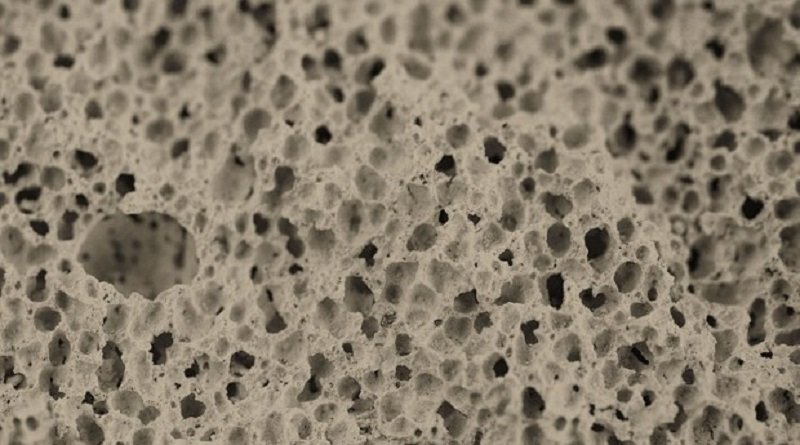
A low-density type of facilitate the development concrete throughout which small air bubbles are dispersed in order to increase its frost resistance: used for making roads.
Example: Air-entrained concrete contains billions of microscopic air cells per cubic foot.
es: Concreto aireado.
Architectural concrete.
Noun.
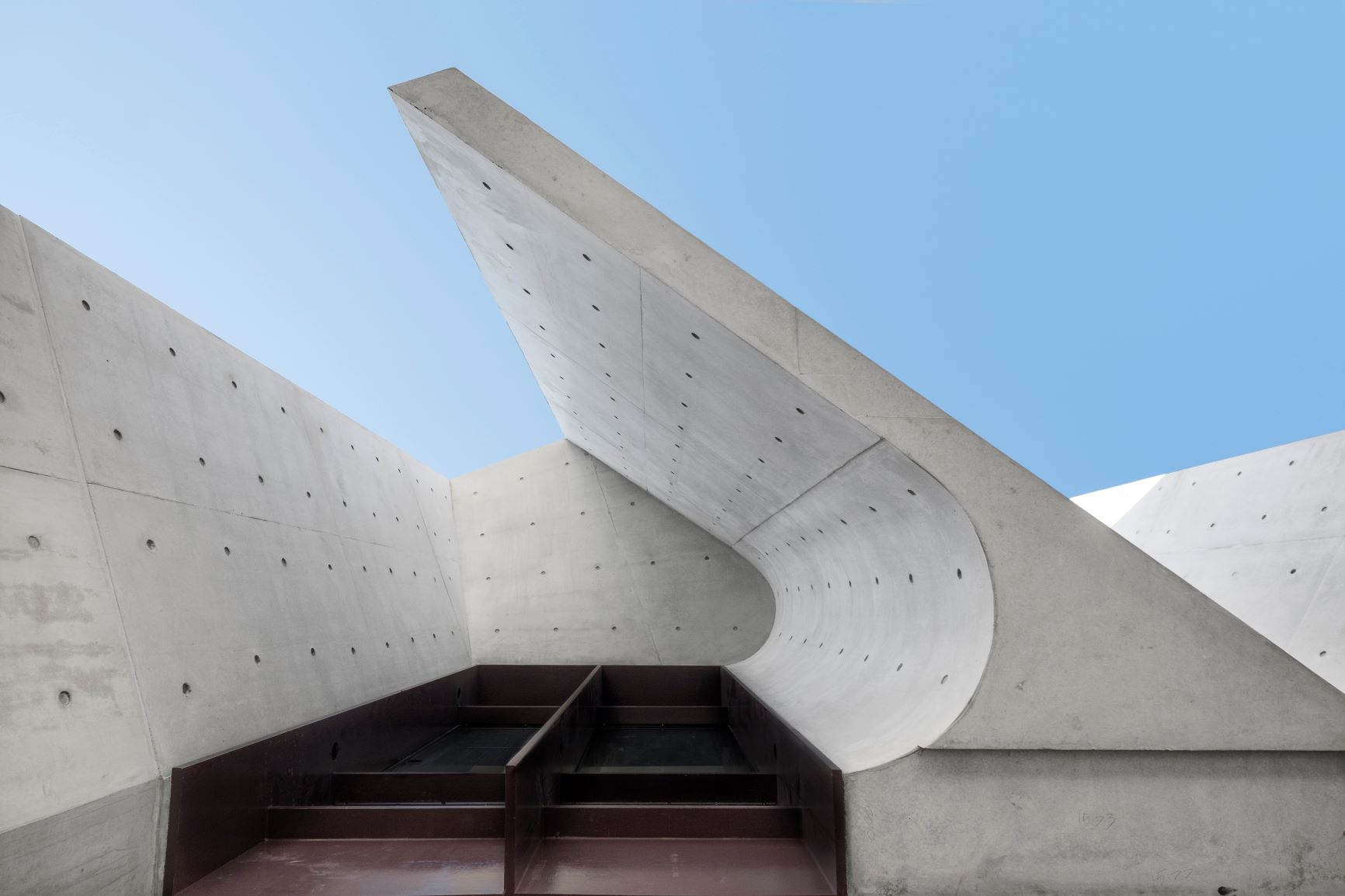
Architectural concrete is concrete that will be permanently exposed to view and therefore requires special care in selection of the concrete materials, forming, placing, and finishing to obtain the desired architectural appearance.
Example: Architectural concrete is cost effective in comparison with other systems being very versatile in design.
es: Concreto arquitectónico.
Asphaltic concrete.
Noun.
Asphalt concrete is a composite material used to pave roads, parking lots, airports and the core of dams.
Example: The sand is being used mostly as an aggregate for cement and asphaltic concrete.
es: Concreto asfáltico.
Cellular concrete.
Noun.
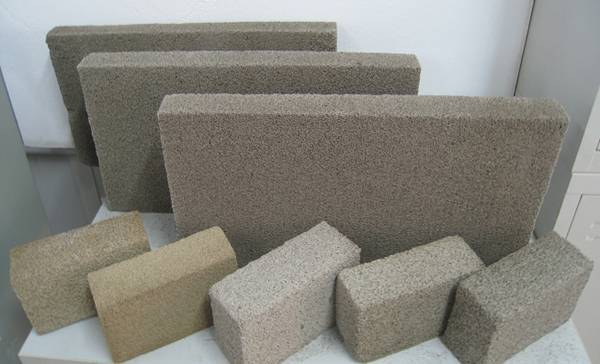
The purpose of the foam is to supply a mechanism by which a relatively high proportion of stable air voids can be induced into the mixture and produce a cellular or porous solid upon curing of the mixture.
Example: The cellular cement is a specially engineered concrete manufactured by mixing the Portland cement, sand, fly ash, water, and pre-formed foam in various proportions to form a hardened material.
es: Concreto celular.
Colored concrete.
Noun.
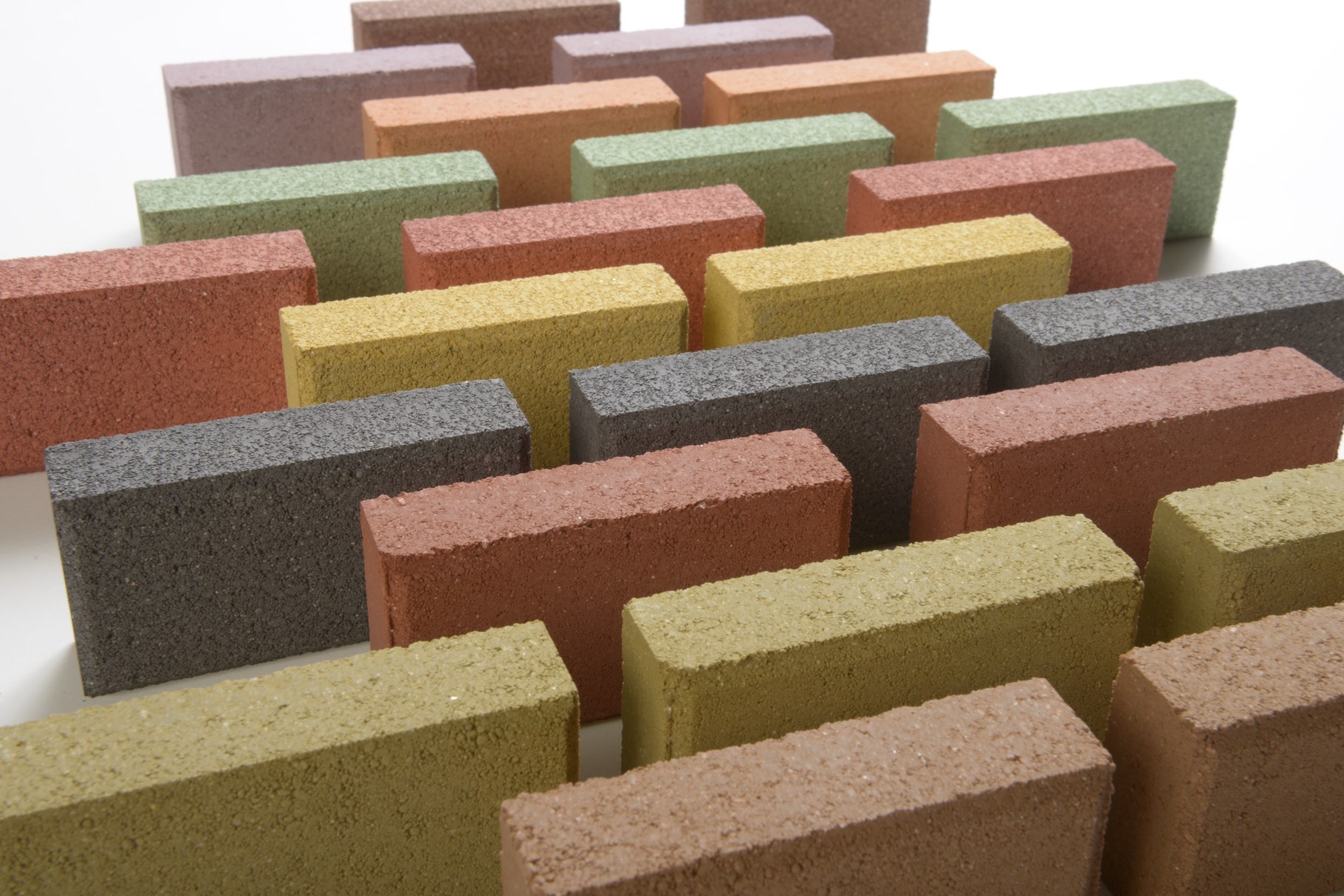
Colored concrete, also known as decorative concrete, allows traditional grey concrete to be stained and dyed different colors.
Example: Concrete has been colored as far back as the early 1900s and was primarily used by companies who made precast structures for building facades.
es: Concreto pintado.
Cured concrete.
Noun.
Curing of concrete is defined as providing adequate moisture, temperature, and time to allow the concrete to achieve the desired properties for its intended use.
Example: At seven days, the concrete must be cured to at least 70 percent of its full strength.
es: Concreto curado.
Exposed concrete.
Noun.
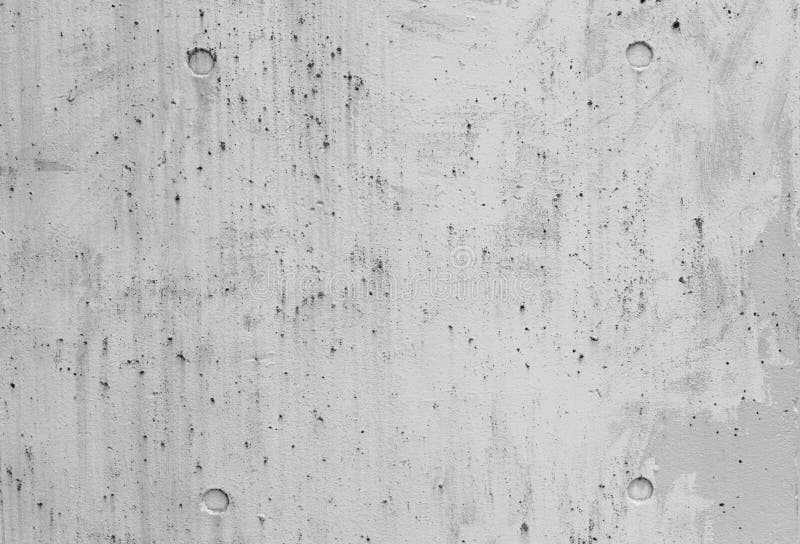
Exposed concrete refers to concrete whose surface is a visible part of the architectural and interior design of the building.
Example: Exposed concrete can produce an acceptable texture and finish for permanent viewing exposure.
es: Concreto aparente.
Green concrete.
Noun.
Green concrete is simply concrete that uses fewer new resources during production. Green concrete replaces a portion of the cement sand with alternative materials and should not be confused with recycled concrete, which only uses recycled materials for aggregate to produce new concrete.
Example: Using green concrete over traditional concrete has a lot of benefits that are purely environmental appeal.
es: Concreto verde.
Insulating concrete.
Noun.
Insulating concrete formwork or insulated concrete formwork is a formwork system for reinforced concrete usually made with a rigid thermal insulation that remains in place as a permanent interior and exterior substrate for walls, floors and ceilings.
Example: Insulating concrete forms create a structural concrete wall, either monolithic or post and beam, that is up to ten times stronger than wood framed structures.
es: Concreto aislante.
Porous concrete.
Noun.
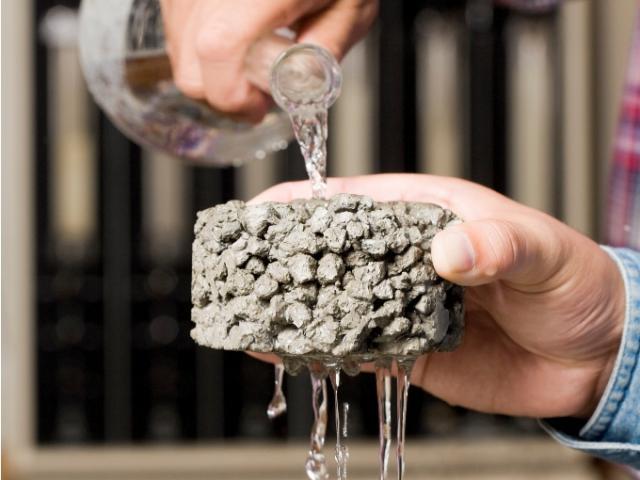
Porous concrete is concrete that is designed to trap water and allow it to percolate through to the ground below.
Example: The void space of porous concrete ranges between 15% and 22%, compared to a three to five percent void space in conventional concrete.
es: Concreto poroso.
Precast concrete.
Noun.
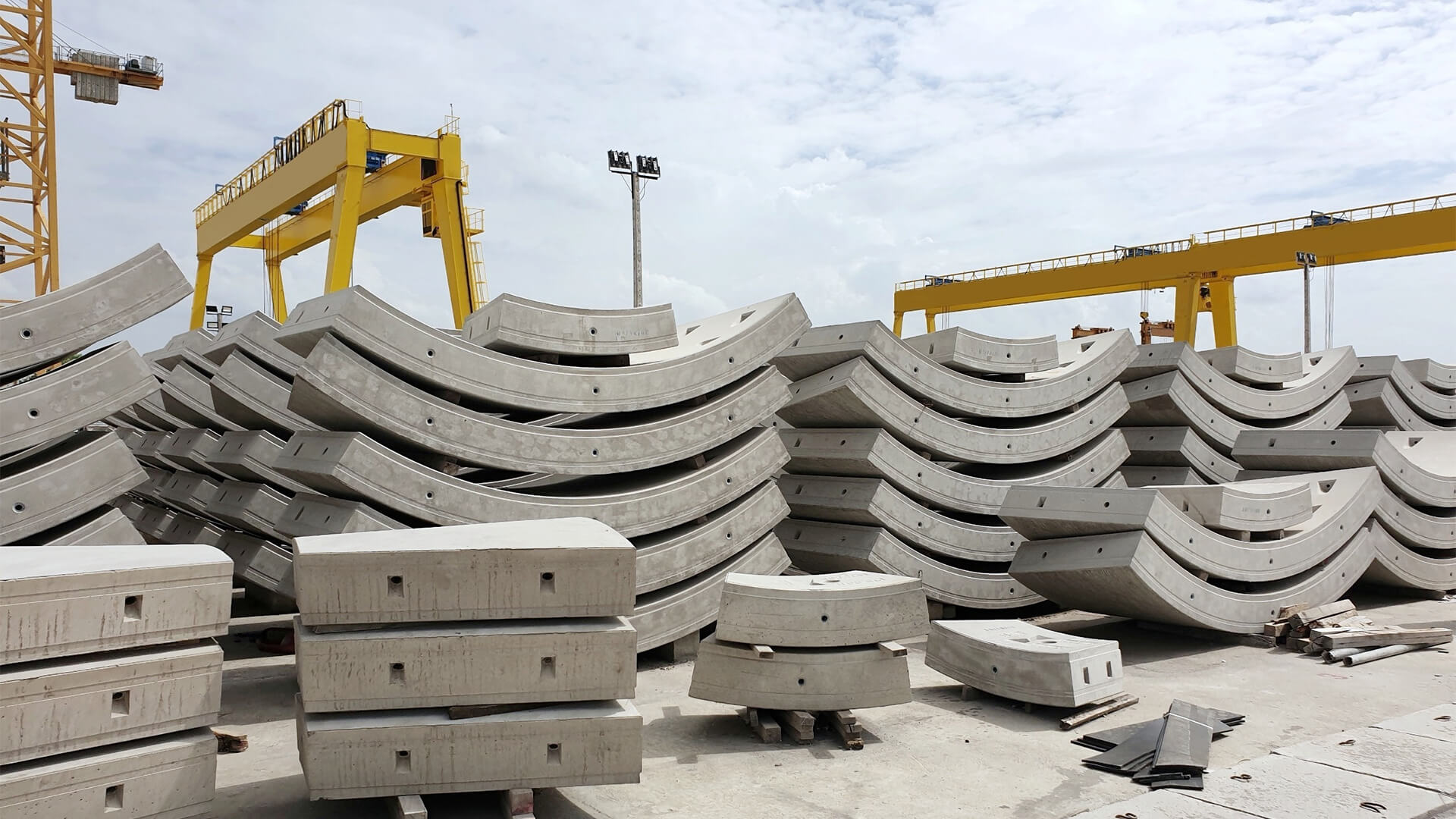
Precast concrete is a construction product produced by casting concrete in a reusable mold or "form" which is then cured in a controlled environment, transported to the construction site and maneuvered into place.
Example: Precast concrete is employed in both interior and exterior applications, from highway, bridge, and hi-rise projects to tilt-up building construction.
es: Concreto prefabricado.
Prestressed concrete.
Noun.
Prestressed concrete refers to the construction technology of concrete structural elements intentionally subjected to compressive stresses prior to their commissioning.
Example: Prestressed concrete is used in a wide range of building and civil structures where its improved performance can allow for longer spans, reduced structural thicknesses, and material savings compared with simple reinforced concrete
es: Concreto pretensado.
Reinforced concrete.
Noun.
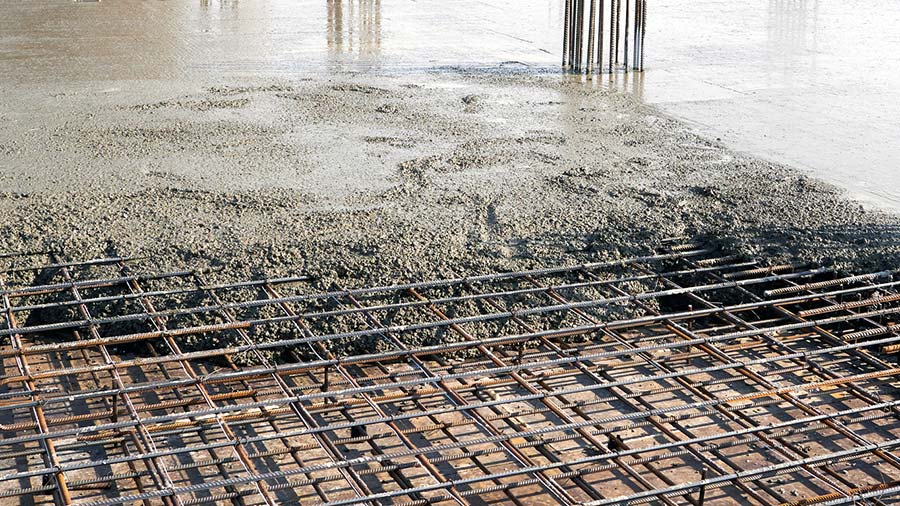
The construction technique of reinforced concrete, consists of the combination of two materials, concrete and reinforcing steel.
Example: Reinforced concrete is a material resistant to compression, able to guarantee a long life.
es: Concreto reforzado.
Unreinforced concrete.
Noun.
Unreinforced concrete is notorious for cracking easily at any sources of stress.
Example: Unreinforced concrete without reinforcement or reinforced only for shrinkage or temperature changes.